Wednesday, February 6, 2013

A Journey Through the Beginning

Sorry that I haven't made any blog posts in a while. But however, I must thank Tamara for the awesome books she brought over for us. I do thank her quite a bit.

(Editor's [mom's] note:  Tamara's interest in K's blog is partly what inspired him to go ahead and create a new blog post!)

Anywho, this is about the various creatures through time.

First off, we have the Cambrian period. In the Cambrian period, the first armored creatures thrived here, it had many trilobites, and the first top predator named Anomalocaris. And in the Cambrian the first human relative appeared.

Anomalocaris
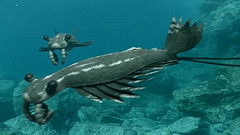
(From walkingwithdinos.wikia.com)

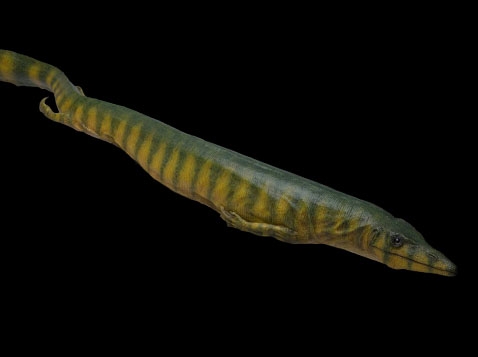
Also in the Cambrian was Haikouichthys which was only about the size of your thumb.

Haikouichthys
(From www.twcenter.net )

The next period is the Ordovician. In the Ordovician, animals have gotten larger. However, back in the Cambrian and the Ordovician , the air is killer due to all the carbon dioxide. Luckily in the Silurian, which I am not going to be talking about in detail in this blog post, many creatures that are coral-like suck in this dangerous carbon dioxide and replace it with oxygen. Unfortunately, today in the present people have created factories and cars which are bring back that CO2 causing the world to warm up. That is the greenhouse effect. It was also very hot in the Ordovician and Cambrian periods. And in the Ordovician  there were these cool vicious things named Megalograptus. It was also the first animal that can go on land.

Megalograptus
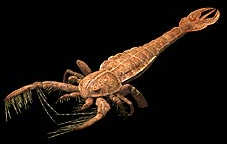
(From www.lifebeforethedinosaurs.com)

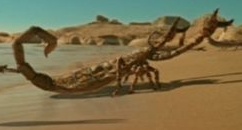
However a somewhat larger scorpion called Brontoscorpio could also do this. The stinger of Brontoscorpio was the size of a small light bulb.

Brontoscorpio
(From histoiredelavie.onlc.fr)

And yet there was even an even larger arthropod (arthropods being prehistoric spiders and spider like creatures) called Pterygotus. Pterygotus was a world wide creature that just didn't live in Antarctica. And Pterygotus' hunting strategy was hiding under the sand waiting for smaller animals to come near and then it would suddenly burst out capturing the prey with its claws. However this sea scorpion wasn't able to go on land due to its large weight.

Pterygotus Trying to Eat a Brontoscorpio
(From www.minecraftforum.net)

But the true top predator is Cameroceras. Cameroceras was a large squid like creature that had a large cone shaped shell on the back that it lives in. It could not actually go back into the shell. It just used it for unknown uses. At least I do not know.

Cameroceras
(From www.lifebeforethedinosaurs.com)


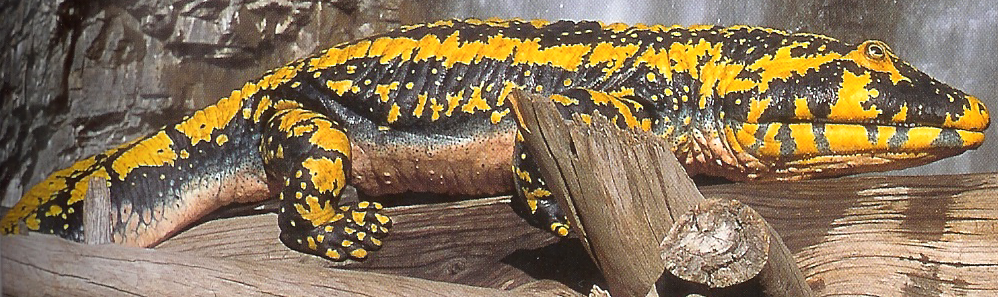
And now we will go forward into the Devonian period. The Devonian period had truly changed. The sea scorpions have grown smaller. There are still a few of the large ones, but mostly they just became their smaller counterparts. Our human ancestors have now finally made it onto land being named Hynerpeton. However Hynerpeton are amphibians. Its hard to believe that humans went from fish to amphibians to reptiles to mammals. I'll talk about the reptile thing a little later in this post. Any way. Hynerpeton could not be on land for too long because it had very thin skin that would quickly dry out. It would need to go back into the water for a while.

Hynerpeton
(From scratchpad.wikia.com)

But back in the water things are extremely dangerous. And it is especially dangerous due to the fact the the first sharks came in around this time. And the particular shark I am talking about is Stethacanthus. Stethacanthus wasn't exactly the largest shark, but it was large enough to chase around a Hynerpeton. And there was something very strange about this shark. The males had a very unusual dorsal find that looked like coral or something. But it wasn't exactly wasn't on the highest part of the underwater food chain.

Stethacanthus
(From www.bbc.co.uk)

I must mention, some plants have also evolved around this time and a little before this back in a period that I did not talk about called the Silurian. I didn't talk about the Silurian because most of the animals are similar to the ones in the Ordovician. The one that would be higher in the underwater food chain would have to be Hyneria. And it would definitely be large enough to eat a Stethacanthus. And yet even Hyneria isn't the top predator.


Hyneria
(From brianlean.wordpress.com)

The true true final predator is Dunkleosteus. Dunkleosteus was an enormous fish with lots of armor and plate-like teeth.

Dunkleosteus
(From www.bbc.co.uk)

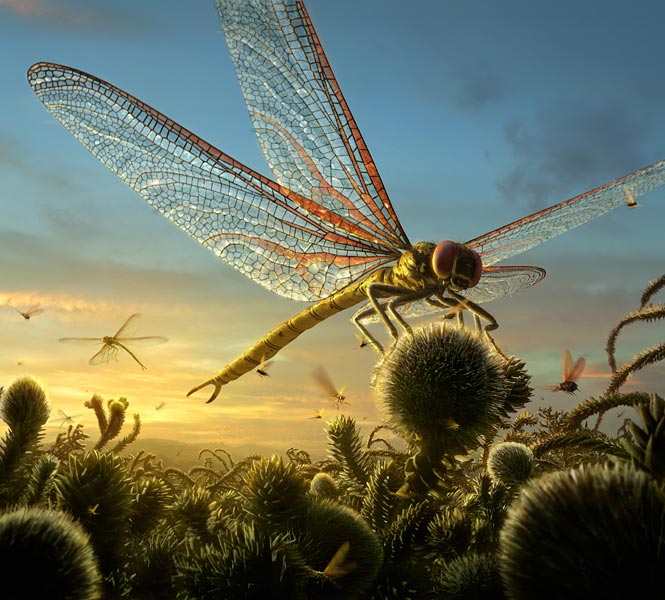
And going further into the future to Carboniferous where there are enormous bugs and the arthropods have gotten big again. One of the largest insects was Meganeura, an enormous dragonfly. Meganeura had a 75 centimeter wing span which could also be said as 2.5-ft wing span.

Meganeura
(From walkingwithdinos.wikia.com)

And there was an enormous relative of the centipede named Arthropleura.

Arthropleura
(From jahandost.wordpress.com)

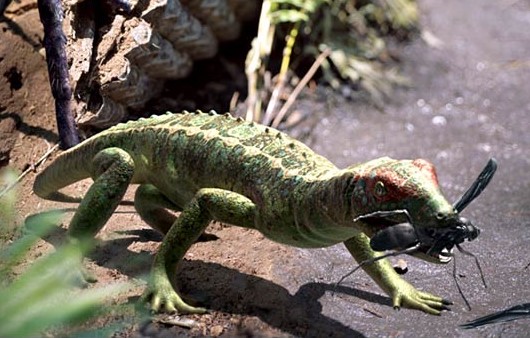
Meanwhile our human relative has turned into a reptile, but a very small one named Petrolacosaurus. Another this about Petrolacosaurus is that it is a mammal-like reptile, that is why we are related to it. As time went on the Petrolacosaurus got bigger and the bugs got smaller due to loss of oxygen.

Petrolacosaurus
(From walkingwithdinos.wikia.com)

The Petrolacosaurus evolved into a much larger version of itself and then as time went on they became small furry animals and then become monkey like creatures called Godinotia.

Godinotia
(From www.abc.net.au)

And then becoming a half ape-half man like creature called Australopithecus and then finally becoming the normal human being as we see ourselves today.

Australopithecus
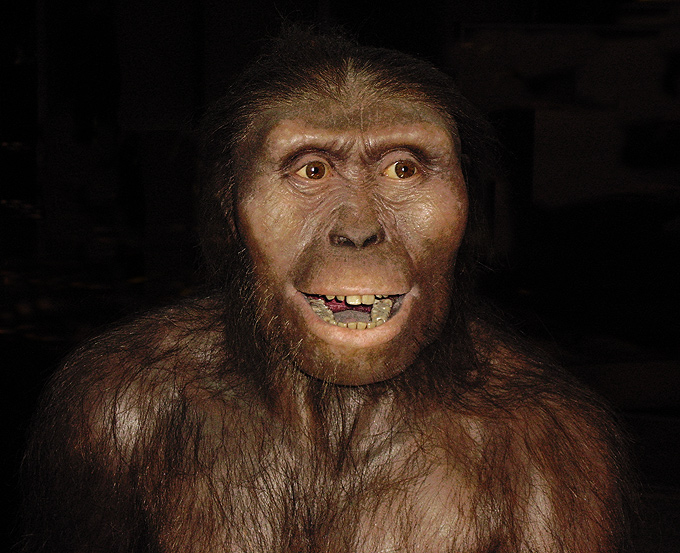
(From www.bradshawfoundation.com


Saturday, October 13, 2012

Micro-land

Sorry, everybody. I have not made very many posts because I have been to the Big E and also Cape Cod. But anyway, let's forget about the past.

In this blog post I will be talking about some of the smaller critters that are probably all around you, from micrococcus to amoebas.

So let's start this with the micrococcus. Micrococcus is one of the more common bacteria - most commonly found in your armpits, in your mouth and in your intestines. And there are many more types of bacteria that live in your intestines. They like the intestines so much so they can get all the left over food that has not been digested by your stomach. There is more. There are also some good bacteria which are not just neutral which are the ones that just hang out in your gut. The micrococcus will hang around in your arm pit and eat all the sweat. The micrococcus is the one that makes that strange smell. The good ones usually are good by doing stuff like making cheese which can also lead to ice cream.

Micrococcus
(photo from faculty.ccbcmd.edu)

The bad bacteria are really, really bad, such as Salmonella. Salmonella can cause bloody diarrhea and of course, like most really, really bad bacteria, create vomiting. Here is a good example of how Salmonella can come on to you: lets say you eat an under-cooked hamburger. Now hamburgers are made from more than one cow. If just one of those cows were sick, it can be passed on to you. One way to avoid that is to eat hamburgers made out of different things. Maybe like salmon burgers.

Salmonella
(From photo-dictionary.com)

Now here is a micro creature called an amoeba. They can reach a max size of 700 micrometers, but that is still not very big. Amoebas were the second creature to be created, I think because they are such simple creatures. They are only one cell, just like bacteria. There are probably many amoebas around your house. Usually they like to live in water and eat all the algae. But they will also eat a faster creature called a paramecium.

Amoebe
(From straightlinesout.blogspot.com)

Paramecium are quite speedy fellows for their size of 200 micrometers. Parameciums will also eat algae.

Paramecium
(From fcps.edu)

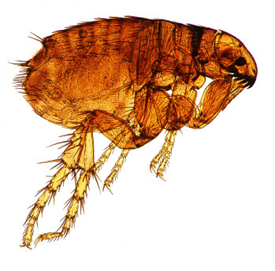
Here is another type of animal that is quite annoying and is not quite a micro creature and this is what it is called the flea. And yeah, I am not talking about that Spanish flea song which is actually one of my favorites. Fleas, well they are not much of a micro creature since they have a size of 1.5 millimeters. Fleas are quite famous for their jumps of 2 feet high, but they aren't exactly the highest of the small-animal jumpers.

Flea
(From cyberbee.com)

There is one that jumps higher and is not considered a micro creature; it is the frog hopper. Well it actually doesn't jump higher, but it is much larger and it can jump the same higher. It weighs 6 times more than the flea and it is at a size of 5 millimeters.

Frog Hopper
(From weheartit.com)

Sunday, April 22, 2012

Rhinos

Rhinos are like bulldozers. They weigh 3,000 pounds and they charge at 31 miles per hour. Rhino have poor eyesight. Anything that's close, they can see no problem, but anything that is far away, everything seems so blurry. And then there are the oxpeckers. The oxpeckers have a symbiotic relationship with the rhinos which is the oxpecker pecks tics off the rhino and the rhino keeps the oxpecker protected. It also gives them their supply of tics. And the oxpecker makes an alarm so the rhino knows it is in danger.

Rhino
(From awf.org)

Oxpecker
(From ibc.lynxeds.com)

Sunday, April 15, 2012

The Portal to Nature 4: Trouble on Train Part 1

Okay, everybody, this is a two part story. Okay here is how it begins.

One day Phil was just taking a walk around the block and he fell into the nature portal. He saw one of his best friends, the spider monkey.

The spider monkey said, "Aww man, Phil. We are going to the big city."

And Phil said, "The big city?"

Spider monkey said, "Yup. The big city, which is called Africa."

Phil said, "Africa is a continent in my world."

Spider monkey said, "Well in the animal world, Africa is name of the biggest city here. We will be taking the only train to there. Now it will be a dangerous run. First there is blizzard lane. Blizzard lane is famous for its blizzards. It is also famous for its avalanches. Although luckily the train tracks don't go near the mountain where the avalanches usually happen. And after we get through blizzard lane, we'll have to go through lava lake. Lava lake is this huge canyon. Below the canyon is a huge river of lava. Although once a year some tar flows in to the canyon from a huge mountain, but once the volcano a few miles away burns up the tar it becomes dangerous again. There is one way over it though. It is a long but rickety bridge. And then we will have to go through Rickety Pit. The pit is a very big pit. A small bridge is the only way to get over it. And like lava lake, the bridge is very small and broken. And that's all we really have to go through. So we'd better catch our train."

[One hour later]

"Here's our train," says spider monkey.

[Two hours later]

Phil and spider monkey enter Blizzard's Lane. And you guessed it. There is a blizzard brewing. Spider monkey for got to mention this - that sometimes the avalanches can pick up enough speed to make it to the tracks. And that was what spider monkey told Phil.

Phil said, "Oh dear, this could really be dangerous."

And the conductor said, "There has been a report about an avalanche covering part of the track. So we can't get through!"

Spider monkey said, "Darn coincidence!"

"The avalanche team will soon clear it out," said the conductor.

To be continued....

Wednesday, March 28, 2012

The Journey of the Monarch

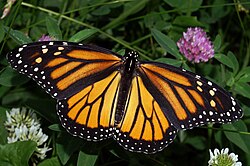
The Monarch butterfly is a very amazing butterfly. Now I will tell you what happens when the Monarch go on their thousands-of-miles journey.

Now they start out forming their chrysalis as a small caterpillar.  They will stay in their chrysalis for about 10 days. When they come out, their wings look a little shriveled up. But give them another chance. They've got to hang upside down and let the blood flow to the wings. And then they start their journey.

The journey starts out easy. They start flying away.  Especially a thousand-mile journey needs to have a rest stop, of course. Monarch butterflies usually eat milkweed. And they have a built-in straw: their proboscis.

Now they take off again. But wait, one of them has found himself trapped in a spider web. For some reason, the spider cut his web and let the Monarch go. Well Monarchs are poisonous. Once a predator takes a bite of it, it won't eat another Monarch as long as it lives.

But what's this? It's another Monarch predator: the blue-tailed tree swallow. But the Monarch has a defense against predators like the blue-tailed tree swallow; they have the defense of flight-movements!

But now they have to cross a lot of water. But luckily the Monarch butterfly has a special feature. They can store fat in their abdomen. But unfortunately, butterflies are very light. But if a Monarch butterfly finds a boat they might be able to ride out the wind. Once the weather stops being windy, they can take off.

Finally, they've made it to their secret hideout in Mexico. But wait, what's going on? Aren't these Monarchs migrators? But for some reason, they're actually hibernating - to wait out the winter. After winter, they start laying some eggs. But unfortunately they are dying, but that's how nature goes.

Here's the whole thing in fast phase. First they come out of the egg and they start to eat the egg. And then they eat a lot. Then they go into chrysalis mode. And then they come out and let their wings get some blood, start the flight, go across a huge lake, hibernate at Mexico, wake up, lay eggs, and then die. And the babies are the ones who continue the journey.

(photo from learner.org)

(photo from wikipedia.com)

Friday, March 9, 2012

Tornado Categories

Tornadoes are some of the strongest forces of nature. Now some are weaker than others. There are different categories of power. Here are the categories that there are.

Here we are with the 2 weak tornadoes: F0 & F1. In an F0 wind speeds are 65mph to 80mph. So that's the wind speeds. Now here's what it'll be able to destroy: well, almost nothing. Just a couple roof tiles taken off and branches taken off trees. And then there's the F1, it's a different story. The EF1 wind speeds are 86mph - 110mph. Chimneys damaged, trees knocked over, and mobile homes destroyed.

Here are the 2 medium tornadoes: F2 and F3. The F2's wind speeds are 111mph - 135mph. Um, quite ok damage. I mean, whole roofs popped off. And well-built barns destroyed. And then there is the F3. F3 wind speeds are 136 mph to 165 mph. Some pretty mean damage. Some damage to walls and cars lifted off the ground and thrown a distance.

And there are the 2 strong tornadoes. These last tornadoes are hard to tell apart. They do quite identical damage, but still, one is stronger. The F4 and F5. F4 wind speeds are 166 mph to 200 mph. Some very, very bad damage. Trees lifted off the ground, and entire houses almost completely swept away. Well F3s can throw trees away too. And then there is the the F5 with wind speeds from 201 mph to, well, the highest wind speeds ever recorded was 300 mph so I'd have to say 300. Huge. Strong houses swept away. They can take the house off their foundations. Total destruction! And that's all.

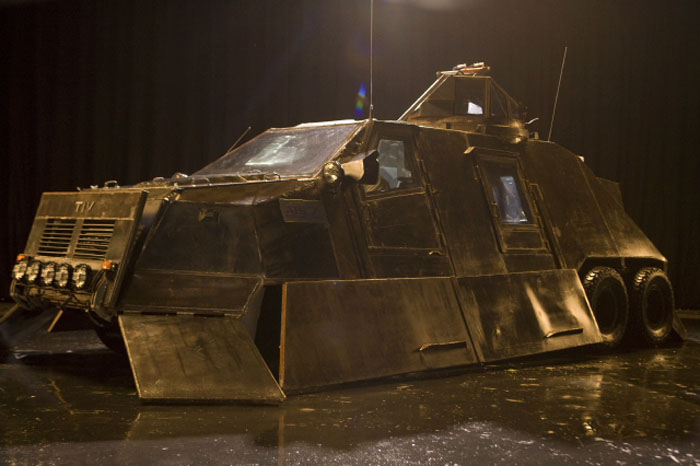
Oh and did you know? There's a vehicle that can go inside a tornado - it's called TIV and the even better version, TIV2. TIV1 had 2-wheel drive. TIV2 had 6-wheel drive and it could intercept more winds than TIV1. It also carried more instruments.

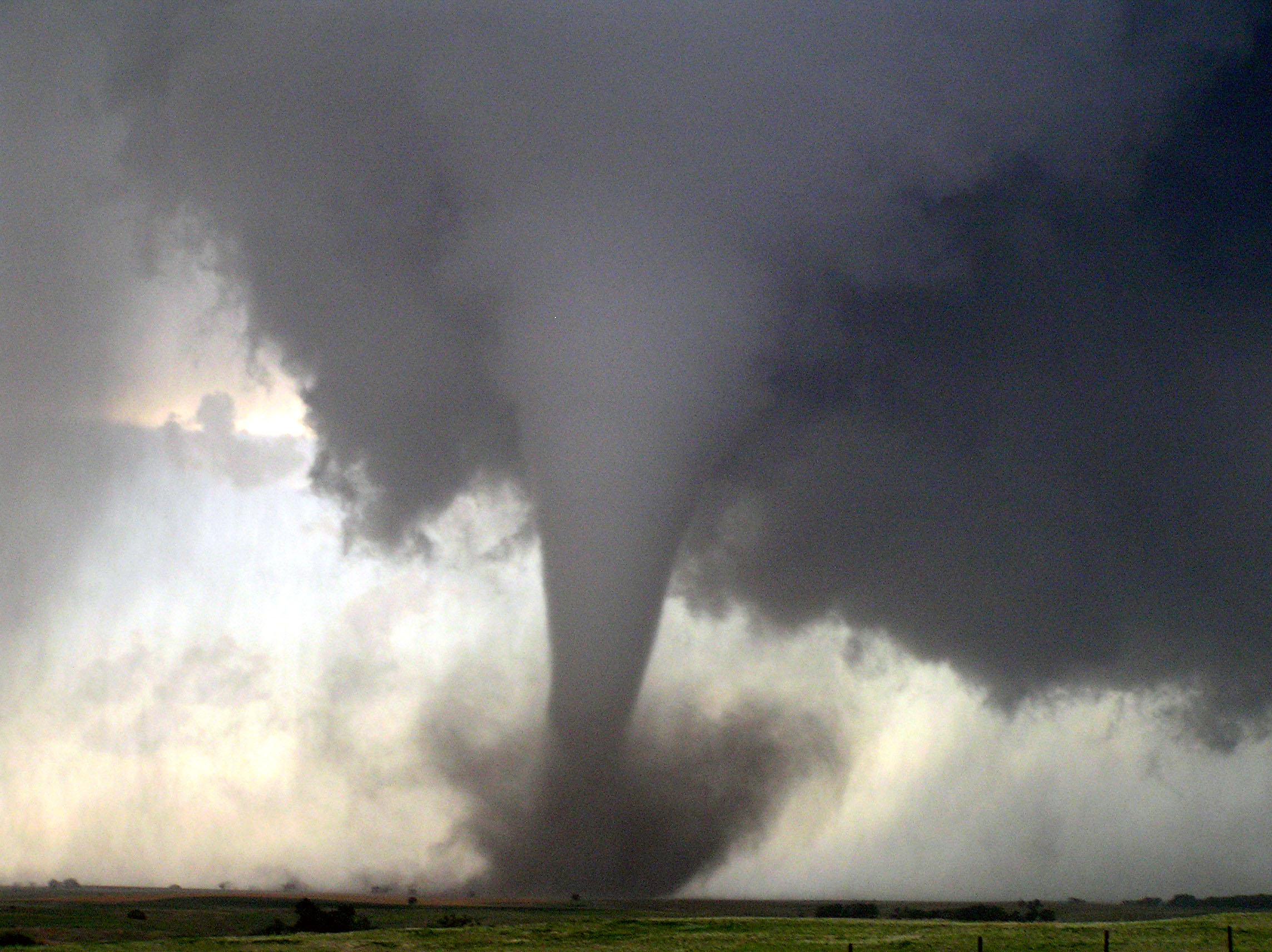
Here's how a tornado is formed. Now we have a it of warm air rising up and some cold air coming down. Where this happens is called the cloud head. And then when they collide, they start to make some twisting. Sometimes it make a sort of funnel cloud sort of thing. If it drops onto the ground, then you got yourself a kind of tornado. But here is another thing, the funnel will start spinning faster and faster sucking up more warm air making it faster and also louder.


(photo of TIV1 from forum.i3d.net)

(photo from thorntonweather.com)

(photo from georgetowndemoc.wordpress.com)


Thursday, March 1, 2012

The Science of Technology

You know, technology has gone very far. We have almost made it to time traveling, but it turns out that it isn't possible. We have made it to a car that can go inside tornadoes and the vehicle is called TIV, the Tornado Intercept Vehicle. And we also just about made it to the flying car. Unfortunately it is quite expensive. We have made it to jet packs that actually fly. And we have made it to phones that are a lot more like a computer. It is like an extra portable laptop. And we've almost made it to cars that can drive by themselves. Now the cars don't go very fast and they can't carry much fuel, but its gone far enough. We've made it to robots that can help us. I've always wanted to see one of those famous robots in action.

Wednesday, February 29, 2012

The Jurassic Sea: The Most Dangerous Place for Me

The Jurassic seas are probably one of the most dangerous seas of all time. Now the dinosaurs may have been pretty big on land, but the only things that could outweigh them were the animals underwater.

Now we start out with one large, meat-eating land carnivore called eustreptospondylus. They were about as big as a giraffe. Now these animals aren't as big as t-rex, probably not even as big as an allosaurus. Maybe bigger maybe not.

But let me tell you something, these carnivores would still eat plenty of food. And I don't know, maybe one small, juicy, rhamphorhynchus. Rhamphorhynchus are these small pterosaurs. They may be a bit small but they're worth the fight.

 But now we will talk about the underwater world. Now underwater: one huge enormous reptile is about to strike. The reptile is called liopleurodon. The liopleurodon is the biggest meat-eater that ever lived. And this large predator is about to strike the ophthalmosaurus. The ophthalmosaurus is in the ichthyosaur family. And they have good night vision probably because of eyes the size of softballs. But even with those softball sized eyes, they won't be able to see the enormous, monstrous liopleurodon who is about to strike.

But wait a second, liopleurodon sees another animal. It's called hybodus, a very small shark but it lived for quite a long time. These creatures survived from the Permian period to the Cretaceous. But even the small hybodus will never be able to fight the liopleurodon. Liopleurodon eat sharks like we eat fish. Well we do eat sharkfin soup. And the shark takes its last look and then WHAM! the shark gets eaten.

But what's in the shadow over there? It's the largest fish ever. It's called leedsichthys. It's a pretty slow swimmer and it's a very, very, vulnerable animal. One of them has fallen behind and it's getting eaten alive by some hybodus and a marine crocodile called metriorhynchus. Metriorhynchus is one of your stranger crocodiles. It's like the leedsichthys is getting mosquito bites. Eventually leedsichthys will die. 8 hours later, now leedsichthys is dead. And now the liopleurodon are snacking on that humungous leedsichthys.

And well well looky here it's the ophthalmosaurus and he's trying to make a snack out of these ammonites. Ammonites are related to today's nautilus. Now imagine it as a unpoppable ballon. and when it is poppable, it will squirt out the air, which is the ink.


(image of Eustreptospondylus from walkingwith.wikia.com)
(image of Rhamphorhynchus from kidsdinos.com)

 (image of Liopleurodon from seamonsters.wikia.com)

 (image of Opthalmosaurus from http://www.abc.net.au)

(image of Hybodus from http://www.abc.net.au)

(image of Leedsichthys from bbc.co.uk)

(image of Metriorhynchus from bbc.co.uk)

(image of an ammonite from fossilmoldsandreplicas.com)

Sunday, February 26, 2012

How Smart are Animals

Animals are actually very very smart. There was once a dog that was so smart, that he knew the name of every single toy that he had and there were like a 1,000 toys. And even when he got a new toy, he would still know it. Perhaps a new chew toy of Einstein?

And dolphins are also very smart. There is one pod of dolphins that are very very smart. You may think a beach with not many underwater objects would be a paradise for dolphins, but really it is a tough place for dolphin survival. Now since fish are pretty small they can go in really shallow water. Dolphins can't really swim in shallow water, they are the size of a human. Well, they can skim across the water. Its quite dangerous and they could get trapped. It is a quite risky mission.

And you may think that not much brain power comes out of a mollusk, well actually it does. You know how much brain power it takes with those cells that change color?  Well it take a lot of brain power to do that. And some people say that things like cuttlefish can't change in any colory patterns. Well actually they kind of can. One time some people experimented to see if a cuttlefish can change to the checkered colors of a chess board. And you know what, it did work! The cuttlefish did make the back and white pattern. It wasn't exactly camouflage, but it got the job done.

Monday, February 13, 2012

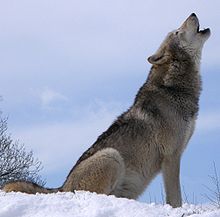
Gray Wolf

The gray wolf is an amazing predator. In fact, they were one of the few animals to survive the Ice Age. But there's this bigger wolf that didn't make it, called the dire wolf. Here's how the big ones did not survive and the smaller ones did.

The dire wolf was eating the really big prey. And the bigger the creature is, the harder it is for that creature to evolve. And the really big prey was disappearing.

Meanwhile the gray wolf was feeding on small things like rabbits and moles. So that's how the gray wolf survived.

And the gray wolf can run pretty fast. And it has this special pace where it can run very far. When it isn't in its pace and it's just sprinting, it can run 40 mph. And when its in its marathon runs, it can run up to 18 mph.
Us humans can run up to 23mph, so the gray wolf can run faster than a human when it's in sprinting mode. And anyway, a human can't run as far as a gray wolf.

Now wolves hunt in packs. The more wolves in a pack, the bigger prey they can take down. But the biggest and hardest to eat is the Moose. Moose can run 35 mph, but they can not run as long. But the moose's weapon is the horns. But they only work on one wolf. But the moose can swim.

Here's how you can tell if the paw prints are really gray wolf's. The gray wolf's paw prints are much bigger than a coyote's or a fox's.

(photo from en.wikipedia.org)

Tuesday, February 7, 2012

Wolverine

The wolverine is the largest member of the weasel family. It's a pretty vicious creature. And "the nose knows," because if a carcass is under an avalanche the wolverine can smell it. The wolverine can smell a carcass 20 feet deep under snow. The wolverine can run on snow very well. Its got built in snow shoe. It can run up to 30 mph on deep snow. In fact, snow is what the wolverine is all about. But unfortunately they're quite endangered because of lack of habitat. Wolverines like to live around very snowy places, that's why they live around Alaska.

(photo from animal.discovery.com)

Saturday, February 4, 2012

The Desert

In this post I will be talking about the desert.

Now the first creature we will meet around here is the desert jackrabbit. Now it may look very toasty in that fur coat of his but really the fur is actually fine and anyway it had ear conditioning. The wide ears help more air go into its ear and that cools the jackrabbit off.

Well you don't usually see the desert tortoise out of its burrow - it's burrow is a place where it keeps out of the sun.

And this place is a haven for collared lizards. Collared lizards can run on their hinds legs so they can get away from their arch enemy the road runner. Because the collared lizard can run faster on two legs.

But one of the meanest reptiles you can fine at the desert is probably the Gila Monster, a venomous animal. The venom isn't exactly the strongest venom in the world but hey this monster is still a monster you would not want under your bed.

For the most part, desert hummingbirds and bees do the pollination for the flowers at the desert.

But at night the bats take over that (the pollination).

Big Bang for Big Beginner

In this blog post I will talk about the Big Bang, the creation of our universe.

Now how did the Big Bang bang? Because it turned just nothing into an extreme KABOOM! Well actually, the Big Bang did start out as this ball of particles and, you know, energy. And then it exploded! And it exploded faster than the speed of light.

But wait, isn't that against one of the laws of nature? Well there's a bit of a loophole. You see everybody says nothing can go faster than the speed of light - and remember when I told you that "nothing" is something, so that means "nothing" can go at the speed of light. And that is saying that the fabric is able to go at the speed of light. And that was the beginning of the fabric - the Big Bang was the beginning of the fabric so the explosion indeedly-did go faster than the speed of light.

And you need just enough gravity for the perfect universe. Now I'm not sure what happens when you put too much or not enough, but here's something amazing: you see, if things get really, really, really, hot, you can turn energy into matter. And that's pretty much what happened at the Big Bang.

But then the Big Bang had to go with one of its biggest rivals: anti-matter! Anti-matter is the total opposite of matter. It was made from the opposite things. Whoever had more leftover matter won. And luckily the Big Bang won! Whoo! Yeah!

But like I said, a universe is going to come to an end, but maybe Big Bangs are happening all over the place. And maybe there will be another universe that will make life and suppport many other objects as well. But still, this universe may be coming to an end. It shall collapse.

But as some people say, death is just about the same as birth.

Friday, February 3, 2012

Food Chain Lane

In this blog post I will be talking about the African food chain.

Ok, I'll start out around the very bottom of the African food chain: the grain of grass. Most herbivores in the Savannah eat grass. And they also like to eat Acacia trees. The Acacia tree is the logo for the show "Nature," so these Acacia trees are pretty much famous.

Well what's higher on the food chain are the herbivores like harvester termites and gazelle. Here are some facts about those 2 creatures. The Thompson's gazelle can run up to 50 miles per hour. And here are 2 facts about the harvester termite. The harvester termite isn't like the one that builds ginormous towers. They're a bit like ants, they live in holes. And here's another fact about those harvester termites: all the harvester termites in one tower could eat more grass than all the other herbivores. Because hey, it's like tiny mighty!


Now what eats harvester termites and what eats Thompson's gazelle? Well bat eared foxes would probably like to eat the termites. And if a gazelle is wounded it would be vulnerable to the python. Here are some facts about these 2 predators. The bat eared fox can hear termites through ground. And pythons are constrictor snakes - that means they have a very tight squeeze. That's their way of killing their prey: squeezing them to death. But believe it or not, we're not at the higest part of the food chain.

We need to go to the top predators. There's only one top predator in Africa: the lion. The lion fact is they may not be able to sprint very well but they are good at tackling. So what did you learn from this blog post? Well, you learned that a herbivore eating grass is no worse than a lion eating zebra.


Acacia Tree
(Photo from parsha.blogspot.com)

 African Grass
(Photo from anthonymattox.com)
Gazelle
(Photo from awf.org)
Termites
(photo from remotecamera-sa.blogspot.com)
Python
(photo from arkive.org)
Bat Eared Fox
(photo from arkinspace.com)

Lion
(photo from razorianfly.com)


Thursday, February 2, 2012

Groundhog

Just for a bit of information, this was made on Groundhog's Day, 2012.

Groundhogs aren't only called groundhogs, they are also called whistle pigs because when danger is near, they whistle. Now this creature does not like to swim, but it can hoggy paddle. And technically it could be called a treehog because if a groundhog wants to, it can climb a tree. And there is even a third name for a ground hog. Its other name is the woodchuck.

But instead of chucking wood, it digs holes. And the holes aren't just a messed up home - they are a lot like the human home, but just underground. Now first the ground hog starts to dig down and then up for the flood stopper, just in case too much water comes in or else the hole could flood. And their ears don't get dirty because they have ear flaps. Their teeth do a little work in the digging. They can chomp through roots and move rocks.

Now the groundhog isn't too fast. It can run as fast as an average 4th grader. Now it may be slow but it isn't picky with homes or food. Here's what it will eat: veggies, fruits, grains, grass, clover, greens. Here are the homes: fields, rocky areas, woods, thickets, under sheds.

But here's the hibernation part. Step 1 for hibernation: fill your stomach with tons of fat because who knows when the groundhog gets hungry during its hibernation.

Now step 2 of hibernation: pack yourself tight with tons of dirt by closing up the entrance and sleep for many weeks and maybe months. And while the groundhog is sleeping, everything starts to slow down. And just like its cousin the beaver, its teeth never stop growing but when the groundhog hibernates, then it stops.

Step 3 of hibernation: start looking for more food and hopefully find a mate to pass on the next generation. And here's how they greet each other when a male and female like each other: they rub cheeks and noses. And these groundhogs don't seem to have any weapons but actually it does: it can chatter its teeth loud enough to get rid of the predators.

Here are the predators: Coyotes, dogs, birds of prey, and foxes.

And the groundhog can really see you from his hole like a periscope - he can see if anyone is approaching his hole. And even if something went past him, he would still be able to know because he's got a good enough nose to know if any other creature has been trying to sneak into the den.

Recommended reading: "Groundhog Gets a Say", by Pamela Curtis Swallow & illustrated by Denise Brunkus.

(photo from uptake.com)

Sunday, January 22, 2012

Tylosaurus and Others

The Tylosaurus was top predator of the underwater Cretaceous. Now here is what this extremely powerful, monstrous, killing machine evolved from: believe it or not it evolved from these super small lizards that were trying to escape the dinosaurs in the Jurassic. And the lizard's only defense was to escape into the water and eventually it evolved to be built for the water. And the creature evolution just made was called Dallasaurus. And when did it evolve? The early Cretaceous.

When the late Cretaceous came, which was the time all the dinosaurs died out probably because of an asteroid, Tylosaurus became a fearsome predator. Probably because of its little special weapon: its teeth. The teeth point back into the mouth, so the only way the prey can go to escape is into the Tylosaurus, but it is hard for it to go inside. It has roof mouth teeth so it can hold the prey in place. Now there are many different types of Tylosaurus, but all of them are related to the snake. The Tylosaurus' future relative is the snake.

Now not all Tylosaurus are the biggest of predators. There is a small one called Platecarpus. And what makes it strange is that it has webbed feet, rather than fins. But Tylosaurus had some fearsome rivals. Now one of them is called the Ginsu Shark, also known as Cretoxyrhina. But Tylosaurus thinks the Ginsu Shark is an easy meal, even though the Ginsu Shark is even bigger than the sharks of today. But here is a really, kind of easy to munch meal. It's called Tusoteuthis, an enormous squid, probably related to today's colossal squid. Another rival of the Tylosaurus is called Squalicorax, another shark. Probably not as big as the Ginsu Shark, but believe me, the Squalicorax  is quite a predator.


(Photo from animals.nationalgeographic.com)
Tylosaurus a.k.a. Mosasaurs
  (Photo from chicospinosaurus.blogspot.com)
Dallasaurus
(Photo from animals.nationalgeographic.com)
Platecarpus
(Photo from animals.nationalgeographic.com)
Squalicorax
(Photo from animals.nationalgeographic.com)
Tusoteuthis
(Photo from animals.nationalgeographic.com)
Cretoxyrhina a.k.a. Ginsu Shark

Here are some videos!